Role before route
Courses begin with the learner’s responsibility and working environment. Owner, professional and operational pathways use different scenarios and expectations.
 Find training
The CRA standard
The standard explains how CRA training is designed, delivered, assessed, reviewed and represented publicly.
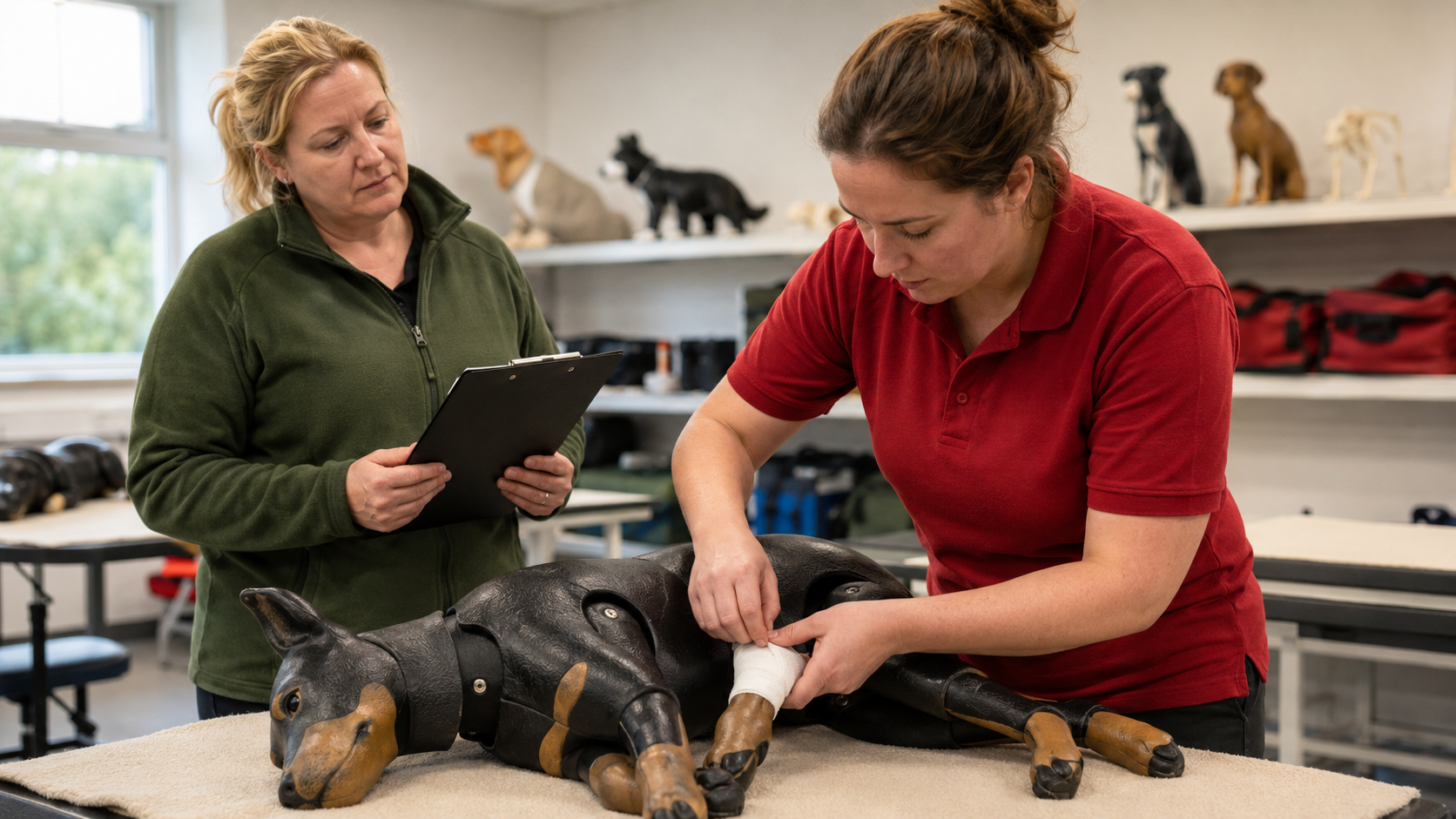
Six working principles
Course pages must match the authorised delivery route. Marketing language never expands the evidence.
Courses begin with the learner’s responsibility and working environment. Owner, professional and operational pathways use different scenarios and expectations.
Learning outcomes describe what a learner should be able to demonstrate, not simply the subjects an instructor will mention.
Instructor profiles will show the evidence held, the provider route, the scope it supports and the date it was checked.
Where assessment is included, learners are told what is observed, what successful performance looks like and what happens if more practice is needed.
Certificate title, issue date, validity, renewal route and status are recorded consistently. Public verification reveals only the minimum proof needed.
Clinical references, legal boundaries, course materials and product instructions are reviewed on a controlled schedule and when material guidance changes.
Professional boundary
CRA teaches immediate, proportionate support while veterinary advice and treatment are reached. It does not teach learners to diagnose disease, prescribe treatment or present themselves as veterinary professionals.
RCVS guidance explains that, subject to defined exceptions, veterinary surgery includes diagnosis and medical or surgical treatment. It is restricted to registered veterinary surgeons.
Read RCVS guidance on treatment by unqualified persons ↗Source control
CRA material is mapped to current sources and carries an owner, review date and change record. Course-specific clinical review remains a publication gate.
The exact period and renewal requirement will match each authorised course. No generic validity is invented.
Public reference pages show their review status; significant changes trigger an earlier controlled review.
A written procedure will define acknowledgement, evidence review, response times, escalation and records before enrolment opens.
Collapse, breathing difficulty, uncontrolled bleeding, major trauma, suspected poisoning, seizures and heat illness require urgent veterinary contact.
CRA will not describe a course or organisation as NASDU approved, accredited, Ofqual regulated or awarding-body recognised unless the exact wording is supported by current written evidence and permission.
Take the next step
Compare the people, outcomes, syllabus and evidence note for every CRA route before booking.